
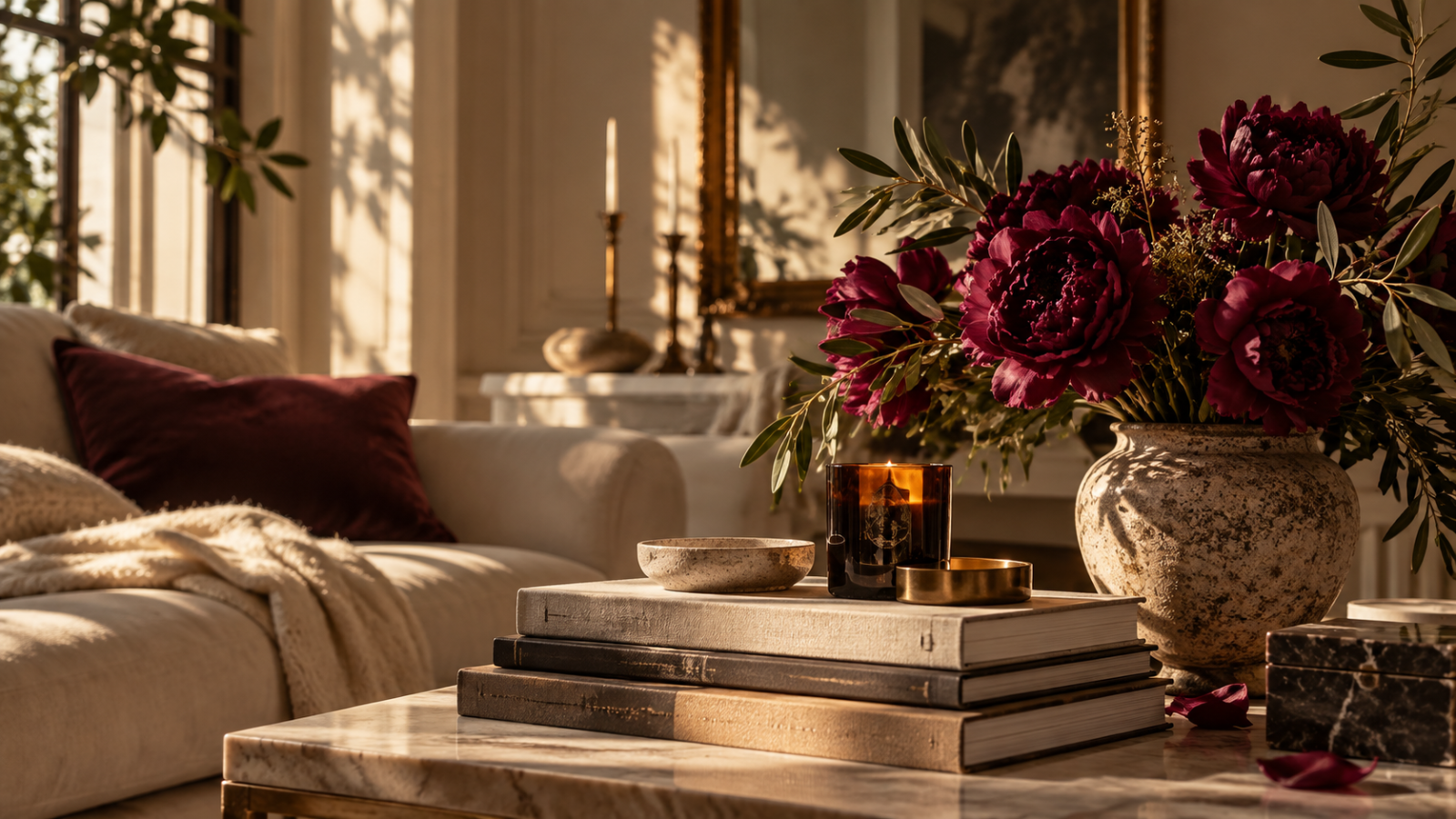
Objects, scent and atmosphere — and why the smallest details are often the ones that change a room.
A room rarely becomes memorable because of how much is in it. More often, it is one carefully chosen thing that catches the eye — the shape of a lamp, a bowl found years ago, flowers in an unexpected colour, or the quiet glow of a candle at the end of the day.
The art of the one good thing
A room doesn’t need a collection of statement pieces. In fact, too many of them compete for attention and leave nothing for the eye to rest on. The most interesting spaces usually do the opposite: they give one object enough room to matter.
It might be a sculptural lamp, a beautifully worn wooden chair, a vase with an unusual shape, or something brought home from a journey years ago. It doesn’t have to be expensive, rare or particularly fashionable. It simply has to feel intentional.
The test is surprisingly simple: if you removed it, would the room feel as though something were missing?
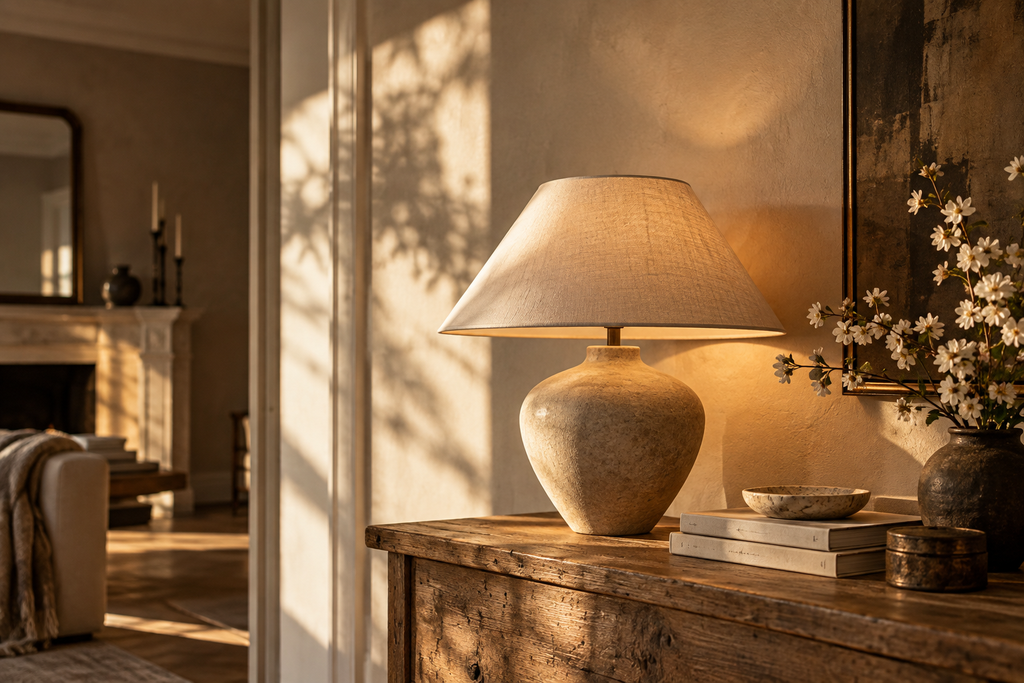
Scent is part of the room, too
Scent changes a room before we have time to think about it. It can make a space feel warmer, quieter, cleaner or more intimate — often without us being able to say exactly why.
This is why fragrance works best when it belongs to the atmosphere rather than announcing itself. A candle burning in the evening, a trace of incense, the green scent of cut stems or a perfume lingering on fabric can become as much a part of a room as its colour, light or texture.
The most memorable spaces don’t necessarily smell strong. They smell considered.
A room should feel collected, not decorated
There is a difference between a room that has been decorated and one that has slowly become itself. The latter usually contains things that arrived at different times, for different reasons — and somehow learned to live together.
A new piece beside something inherited. Smooth ceramic against old wood. A book left where it is actually read. Flowers that are slightly past perfect. These small inconsistencies are often what give a room its character.
The aim isn’t perfection. It is recognition: the feeling that this room could belong to no one else.
The things worth noticing are rarely the things shouting for attention.
Notice what stays with you
The rooms we remember are rarely the most perfect ones. They are the ones with a point of view – a particular light, a familiar scent, an object we find ourselves looking at twice.
Creating that kind of space isn’t really about adding more. It is about paying closer attention to what already makes you feel something, and giving it room to be noticed.
Perhaps that is the simplest rule of all: choose less, notice more.