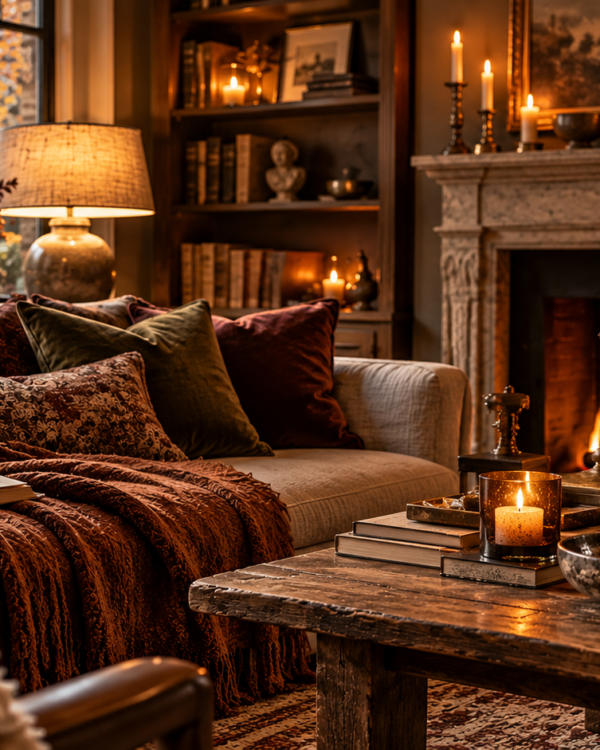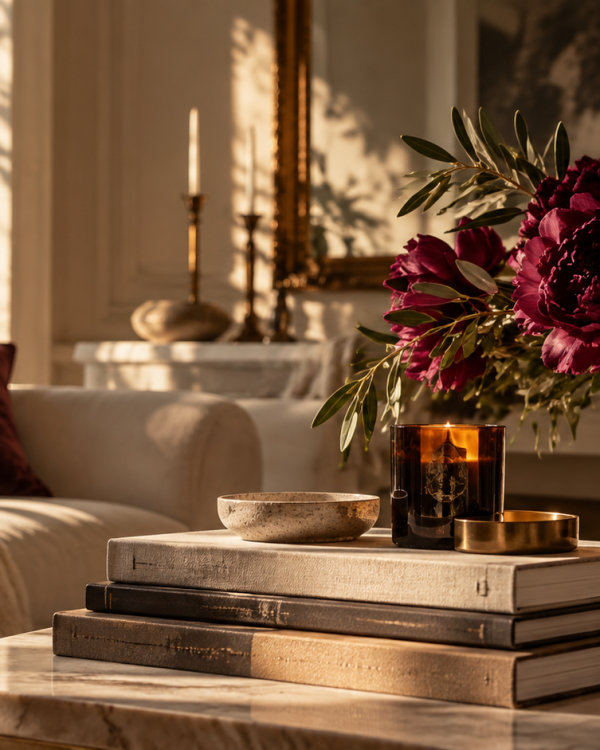
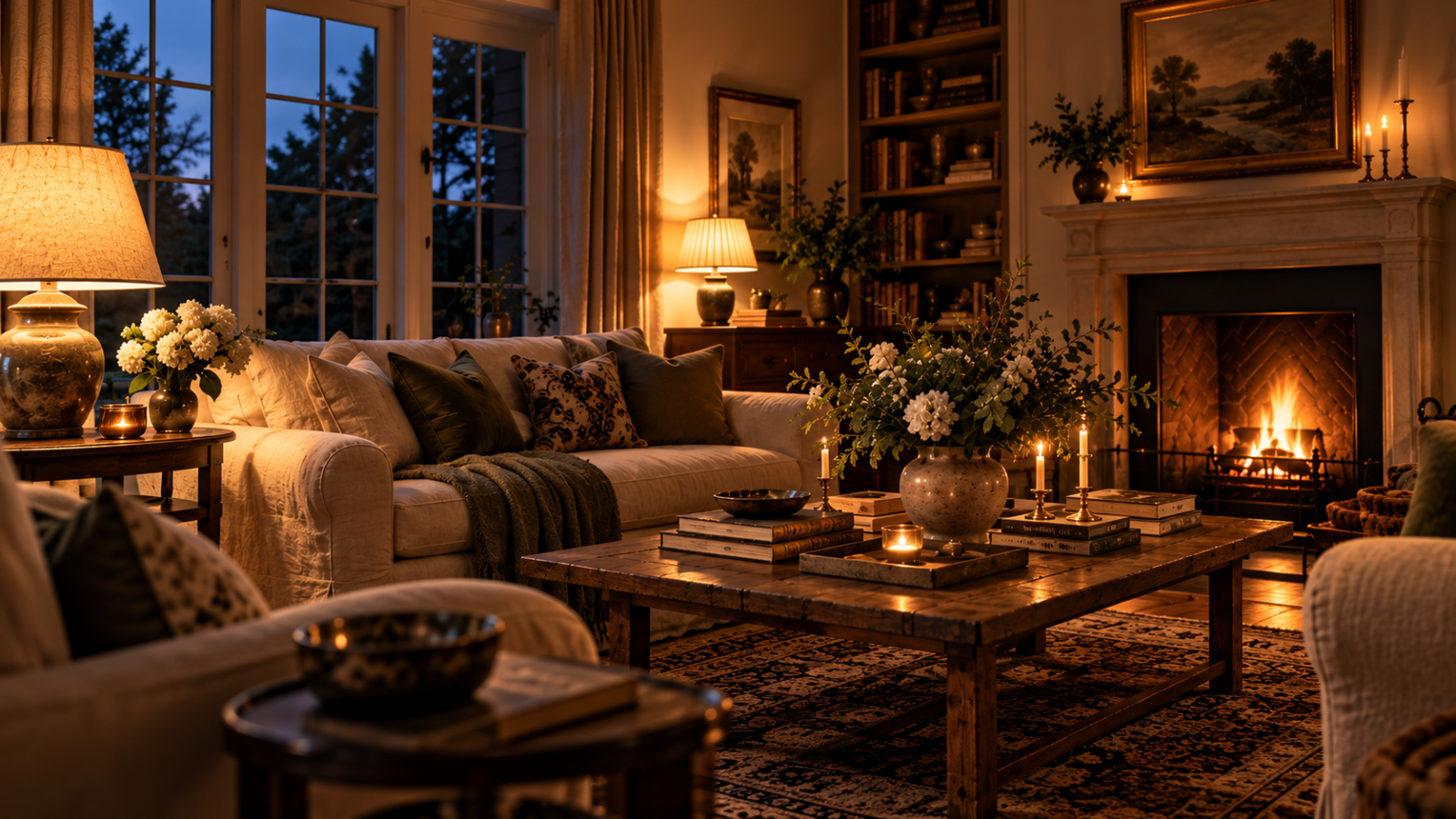
We rarely consider how much warm ambient lighting shapes the way we experience a room—or how we feel within it.
As twilight falls, the bright, practical light that served us so well during the day can begin to feel strangely out of place. The room may be perfectly illuminated, yet somehow less inviting. There is a difference between having enough light to see and having the right light to feel at home.
Creating an atmosphere of quiet distinction requires neither an extravagant budget nor a complete redesign. More often, it comes down to the placement of a lamp, the softness of a shadow, and the simple act of allowing the day to draw to a close.
The Ritual of Twilight
There is a profound domestic pleasure in the ritual transition from day to evening: drawing heavy curtains, extinguishing practical work lights, and waking two or three warm lamps across the living space.
It is a small ceremony, easily overlooked, yet capable of changing the character of an entire room. The familiar furniture remains exactly where it was, the books and objects have not moved, and still the atmosphere shifts. What felt ordinary an hour earlier becomes intimate and quietly reassuring.
The amber glow recalls the last embers of an old hearth, a gentle reminder that the demands of the day need not follow us indefinitely into the evening.
The Beauty of Light at Different Heights
A single overhead light may illuminate every corner of a room, but it rarely gives that room much character.
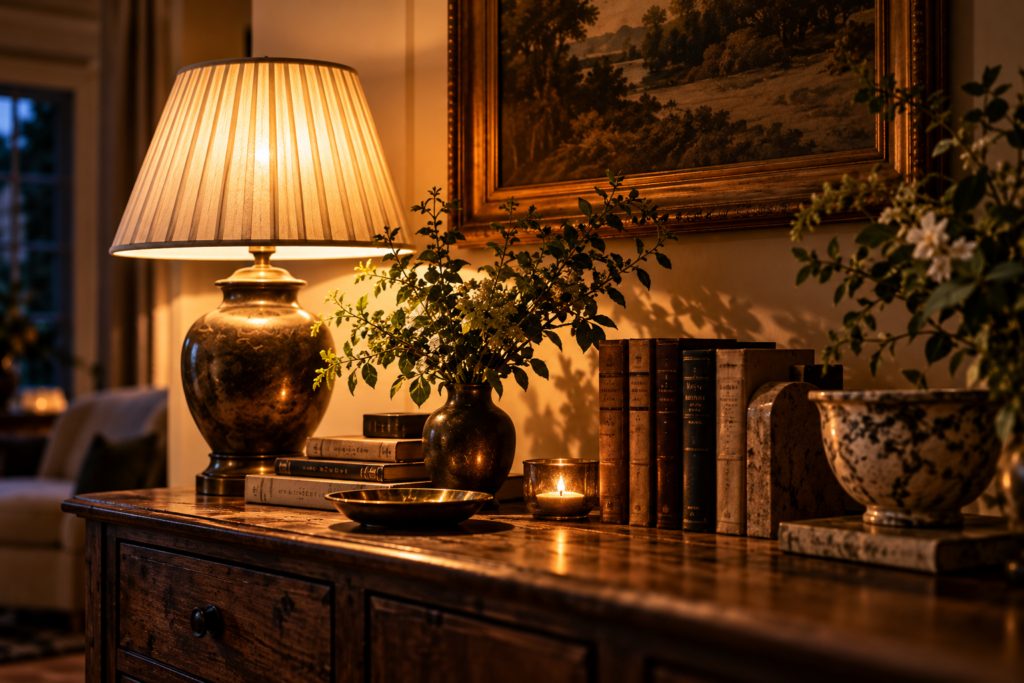
More interesting interiors allow light to arrive from different directions and at different heights. A table lamp on a low sideboard, a floor lamp beside a favourite armchair, perhaps a small shaded lamp tucked into a bookcase—each creates its own quiet pool of illumination.
The effect is not simply decorative. Light at different levels gives a room depth, allowing some surfaces to come forward while others recede gently into shadow. It softens the boundaries of a space and makes even a modest room feel considered.
There is no need to illuminate everything at once. Two or three thoughtfully placed lamps will often achieve more than a ceiling full of spotlights.
Thoughtful lighting is only one part of creating a room that feels beautiful for years. Explore more ideas in Timeless Living Room Ideas That Age Well.
The Colour of Warm Ambient Lighting
Not all warm light is created equal.
The colour temperature of a bulb, measured in kelvin, has a remarkable influence on how a room appears after dark. For a softly lit evening interior, bulbs in the region of 2200–2700 K can provide anything from a mellow, candle-like amber to the familiar warmth of a traditional incandescent lamp.
Yet the number on the packaging is only part of the story. A linen lampshade will diffuse light differently from clear glass; an aged brass fitting may lend a golden character to its surroundings, while a dark shade directs the glow into a more concentrated circle.
A dimmer, where suitable, offers another kind of freedom. The same lamp can provide useful illumination early in the evening and something far gentler later on.
The aim is not to turn every room orange, but to find a quality of light that flatters the materials around it and makes the space feel welcoming.
Let the Light Find Something Beautiful
One of the quiet pleasures of evening lighting is discovering what it chooses to reveal.
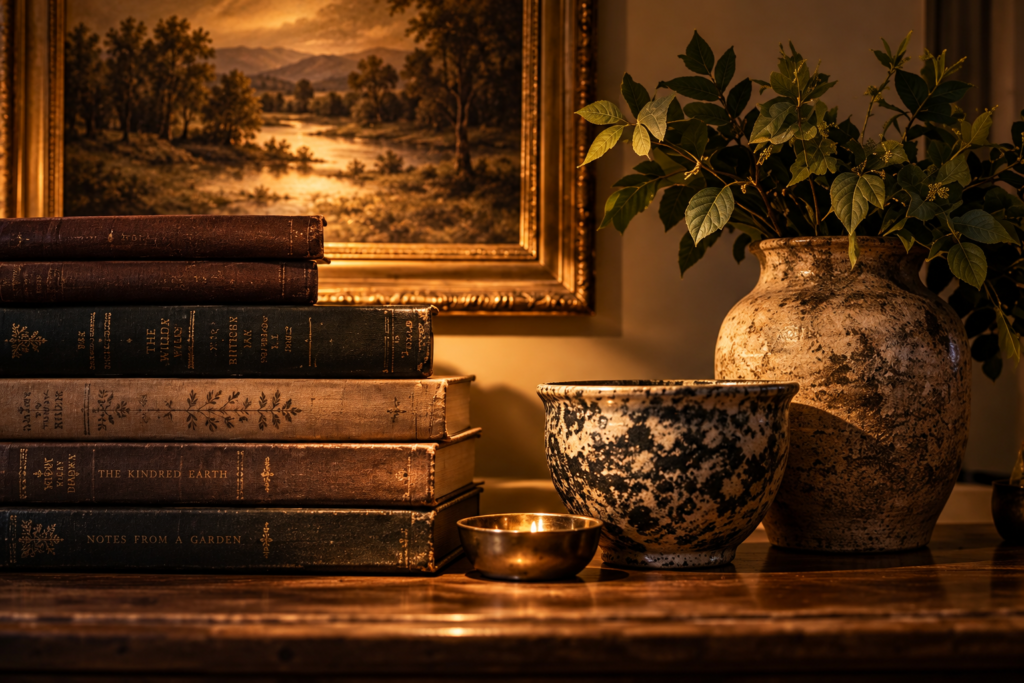
A lamp placed beside a wooden cabinet can bring out the depth of its grain. Soft light grazing a linen curtain makes the fabric appear almost sculptural. A row of old books, a handmade ceramic bowl, or the imperfect surface of a framed painting may suddenly acquire a presence that daylight never quite gave them.
This is where lighting becomes something closer to composition.
Rather than asking how brightly a room should be lit, consider what deserves to be noticed. Perhaps it is the corner where you keep your favourite books, a piece of furniture inherited from someone dear, or simply the beautiful texture of an ordinary wall.
A carefully directed glow can make familiar things worth looking at again.
Embracing the Darkness
Allow areas of the room to stay dark.
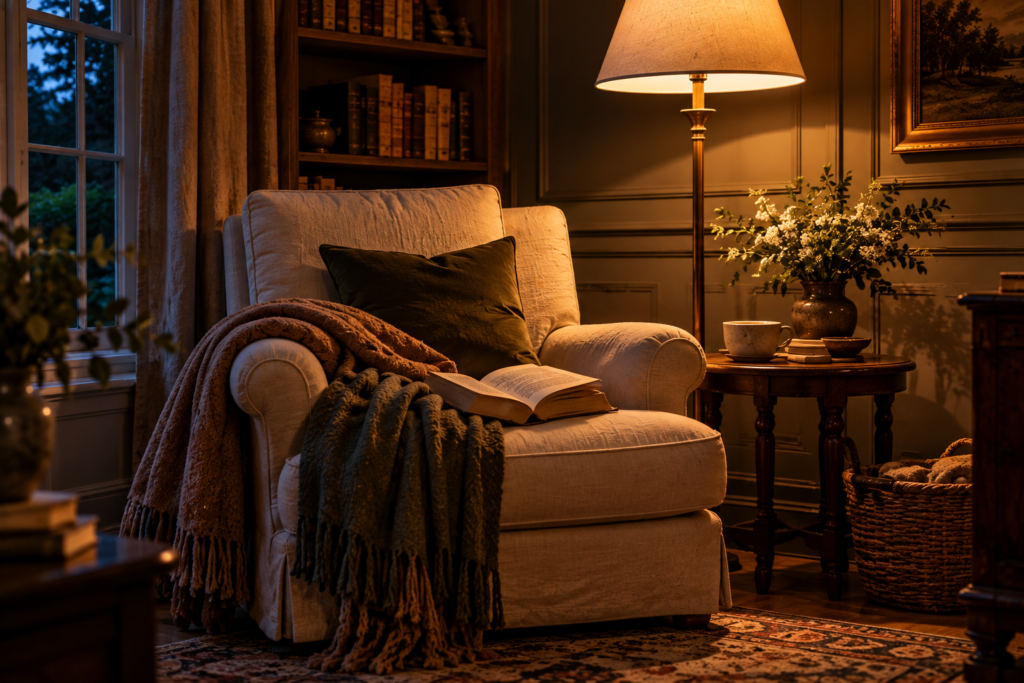
A space where every surface is brightly visible can feel exposed and strangely hollow. When light is concentrated around the places where we sit, read, or gather, the surrounding shadows become part of the room’s character.
There is comfort in this gentle contrast. A softly illuminated armchair beside a darker corner, a pool of light across a table while the rest of the room recedes—the space begins to feel smaller in the most reassuring way.
When ambient light is concentrated only where you sit, the room wraps around you like a heavy coat, offering protection from the speed and noise of the outside world.
Darkness need not be an absence to correct. Sometimes it is precisely what allows the light to feel beautiful.
A Room That Changes With the Hour
The most inviting rooms are not necessarily lit the same way throughout the evening.
Early on, there may be dinner to prepare, a conversation to enjoy, or a book that deserves proper reading light. Later, as the house grows quieter, one lamp may be switched off, another dimmed, until only a small circle of warmth remains.
Good evening lighting makes room for these changes.
A reading lamp should still allow you to read comfortably without straining your eyes. A softly glowing lamp on a side table may be enough for listening to music or sitting with a cup of tea. And in the final moments before bed, a gentle, low-level light can help the home feel ready for rest.
There is something deeply satisfying about a room that follows the rhythm of its inhabitants rather than insisting on a single, unchanging brightness.
Perhaps the art of evening lighting is not about illuminating a room at all.
It is about knowing what to leave in shadow, what to bring gently into focus, and when to let the day finally disappear.
A Note for Later
The next time evening falls, try switching off the overhead lights and leaving only the lamps you love. Notice how differently the room begins to feel.
Sometimes the smallest change is the one that stays with us.